
Best Basketball Private Schools in Canada: What Should Families Compare?
How should families choose a basketball private school in Canada? Compare academics, player development, coaching, competition, development tiers, NCAA pathways, student outcomes, and support.
What Should Families Compare to Find the Best Basketball Private School in Canada?
The best basketball private school isn’t always the one with the most wins or the biggest name. For parents, choosing the right program means looking at the whole student athlete experience, from academic quality and flexibility to individual player development, coaching, competition, and opportunities to prepare for university or the NCAA.
It’s also important to consider what happens beyond the court, including student life, mentorship, academic guidance, and overall support. The strongest basketball programs bring all of these pieces together to create an environment where young athletes can develop their game, succeed academically, build confidence, and grow as individuals while finding the right fit for their goals and their family.
Choosing a Basketball School Is About More Than Basketball
For a young basketball player with serious ambitions, choosing a private school is about much more than finding the school with the strongest team. A school may win many games but provide limited individual development. Another may offer excellent basketball training but insufficient academic support. A third may have impressive facilities but limited competition or university exposure.
Families should also ask what happens when the student's ability changes. A Grade 8 player may develop rapidly. A Grade 10 player may need stronger competition. Another athlete may benefit from temporarily training with a more advanced group while continuing to compete at his or her current level.
The better question is: Which school provides the best environment for this particular student-athlete to develop academically, athletically and personally - and to prepare for the opportunities that may come next?
Basketball should expand a student's future opportunities - not reduce them. A serious student-athlete may train several times per week, travel for tournaments, and need flexibility around competition and university planning.
Questions families should ask
What curriculum and diploma does the school offer?
How are missed classes and competition travel managed?
Is tutoring or additional academic support available?
Can course schedules accommodate intensive training?
Who monitors academic progress and university requirements?
What to look for: A school where academics and athletics operate as one student-development system rather than two competing schedules.
Academic Quality and Flexibility
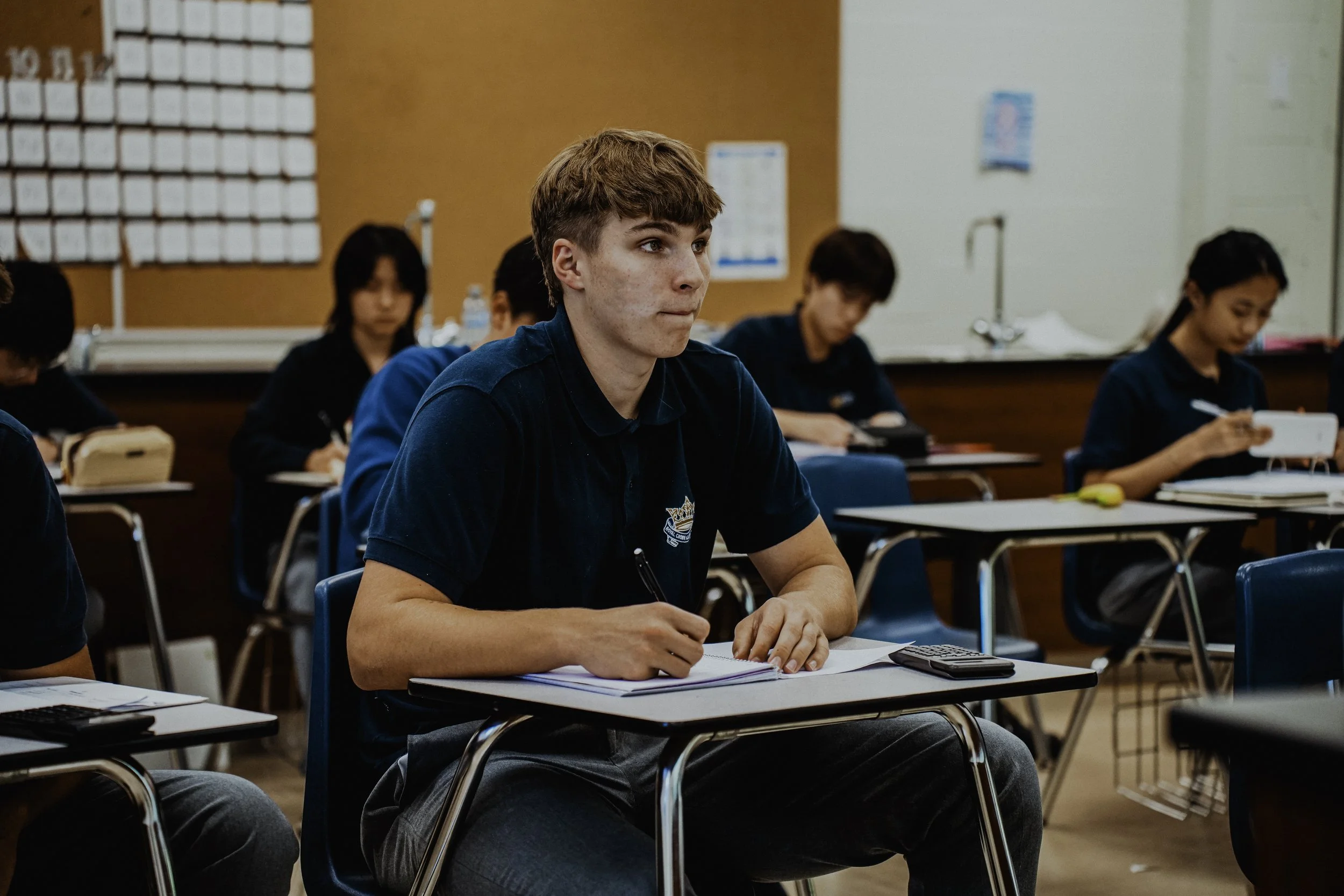
A strong team does not automatically mean strong player development. Parents should ask how the school will make their child a better player over the next two or three years.
Questions families should ask
Does the program identify each player's strengths and development priorities?
Does development include skills, strength and conditioning, basketball IQ, tactical training, competition, film and feedback?
How frequently does the player receive individual feedback?
How is progress evaluated?
What to look for: The goal should not simply be to help the team win today. It should also be to help the player become better tomorrow.
Individual Basketball Development
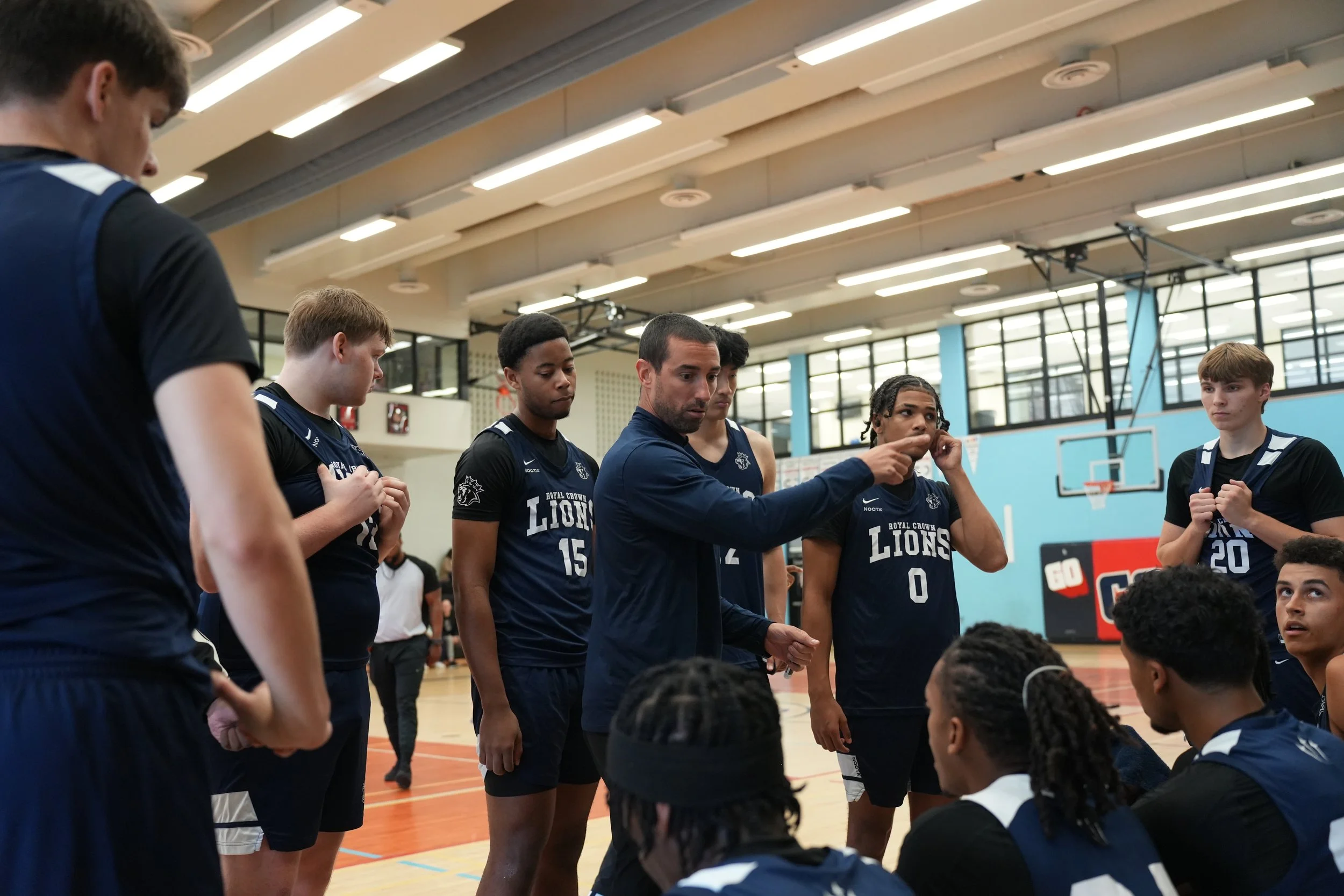
Facilities matter. Coaches matter more. Families should understand who will actually work with the student and whether coaches can develop players at different ages and ability levels.
Questions families should ask
What is the coaches' player-development experience?
How do coaches evaluate a new athlete?
How is feedback communicated?
How do coaches coordinate across teams and development levels?
What to look for: Ask: "If my child joins tomorrow, how will you determine what he or she needs to improve?"
Coaching Quality

Tiered Development System and Player Mobility
This is one of the most overlooked factors when families compare basketball schools. A basketball program should not be viewed simply as Team A + Team B + Team C. A stronger model is a development pathway in which players can progress through different levels as their age, ability, physical development and readiness change.
Questions families should ask
How many development levels does the program offer?
How are players placed into the appropriate team?
Can players move between levels as they develop?
Can a player occasionally train with a higher-level group?
Can coaches create competition opportunities across different teams when appropriate?
Do different teams use the same basketball terminology and principles?
Is there a consistent coaching methodology across the program?
What happens when a player develops faster - or slower - than expected?
Why a Unified System Matters
If every team operates independently - with different terminology, systems and coaching principles - moving between teams can be difficult. When the entire program operates within a unified basketball system, mobility becomes much easier.
Players already understand: Terminology -> Training Methodology -> Playing Principles -> Expectations -> Development Standards.
A coach can therefore decide, for example, "This player should train with the next tier this week," or "This athlete is ready for an opportunity to compete at a higher level," without requiring the player to learn an entirely different basketball system.
Development Mobility: Right Player -> Right Level -> Right Challenge -> Right Opportunity -> Continued Development.
The RCS Tiered Basketball Development System
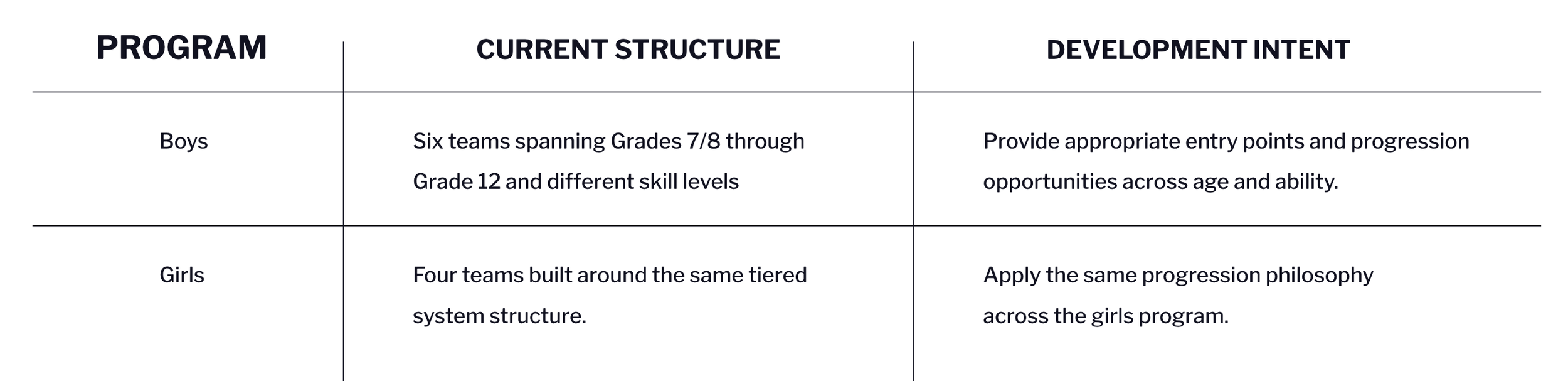
At Royal Crown School, basketball is structured as a multi-level development system rather than a single team.
At RCS, our basketball teams are connected through one unified development system, giving student athletes a clear and supportive path as they grow. Across each level, our coaches work from shared training methods, basketball concepts, terminology, and development expectations, while still recognizing that every player develops at their own pace.
The goal isn’t simply to have more teams. It’s to make sure every student athlete has an opportunity to find the right starting point for their current level and continue progressing from there. As a player develops, they may have opportunities to train, compete, or move between levels based on their readiness, development, goals, and the guidance of our coaching staff.
For parents, this means the question doesn’t have to be, “Is my child good enough for the top team right now?”
Instead, it becomes, “Where is the right place for my child to start, and how can we help them get to the next level?”
It’s about meeting each athlete where they are today, while helping them see what’s possible tomorrow.
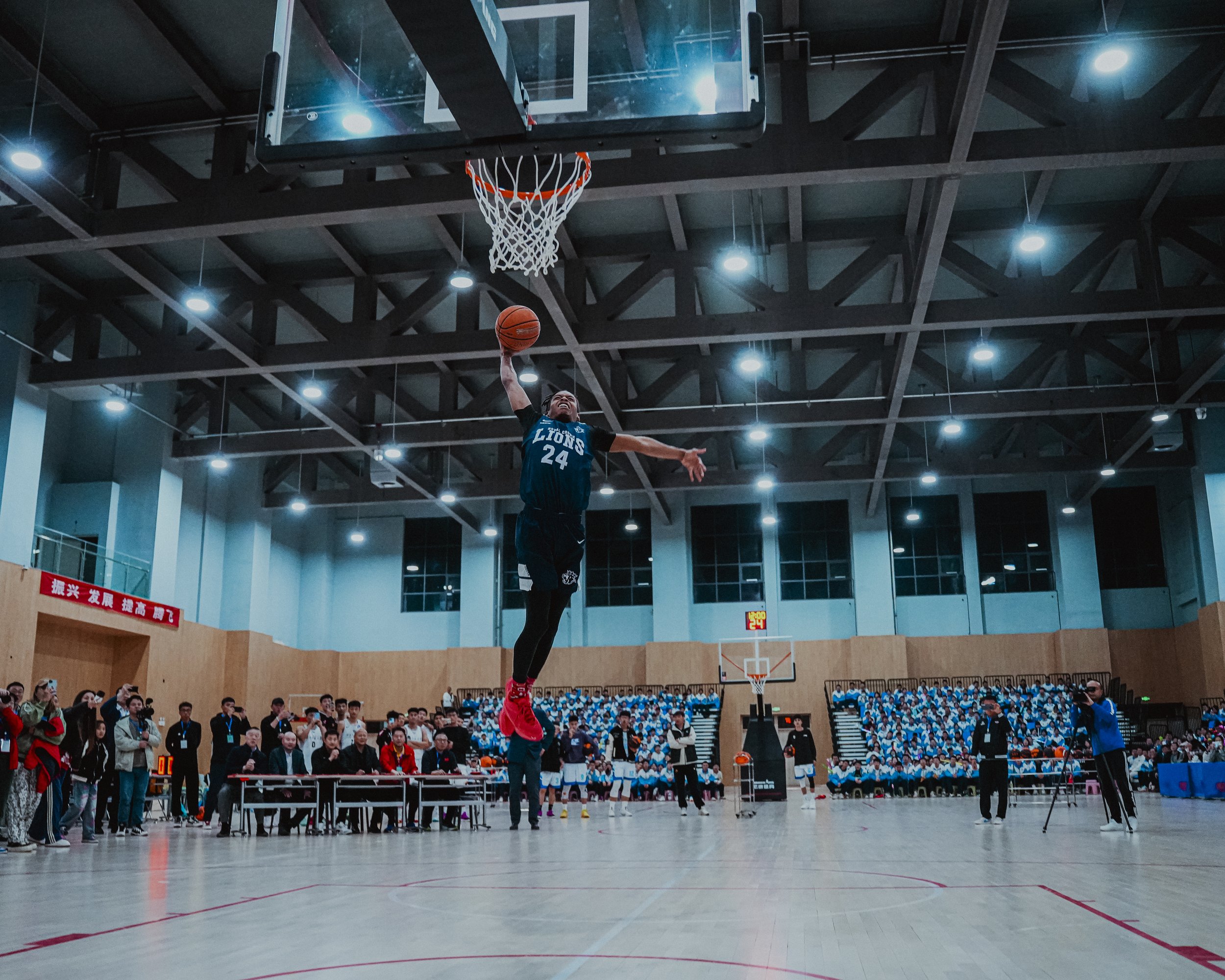
Quality of Competition and Playing Opportunities
Training develops skills. Competition tests them. Families should consider the quality of competition, the appropriate level, and meaningful playing opportunities rather than simply counting games.
Questions families should ask
What leagues and tournaments does each team play?
What level will my child realistically compete at?
How are playing opportunities determined?
Can players receive opportunities at different competition levels?
How is game performance used to inform training?
For older student-athletes, basketball development should gradually connect with university planning. No school can guarantee an NCAA scholarship; a strong school should help families understand and navigate the process.
Questions families should ask
When does university planning begin?
Who helps identify appropriate universities?
Does the school understand NCAA eligibility requirements?
Does the program support player profiles and game film?
What verified outcomes have previous student-athletes achieved?
University and NCAA Pathway
Track Record and Evidence
Every program has marketing. Families should ask for specific, verifiable evidence rather than relying on logos or broad claims.
Questions families should ask
What are the verified university destinations?
At what level did graduates play?
Were students admitted, recruited, rostered or awarded athletic aid?
Over what time period were the outcomes achieved?
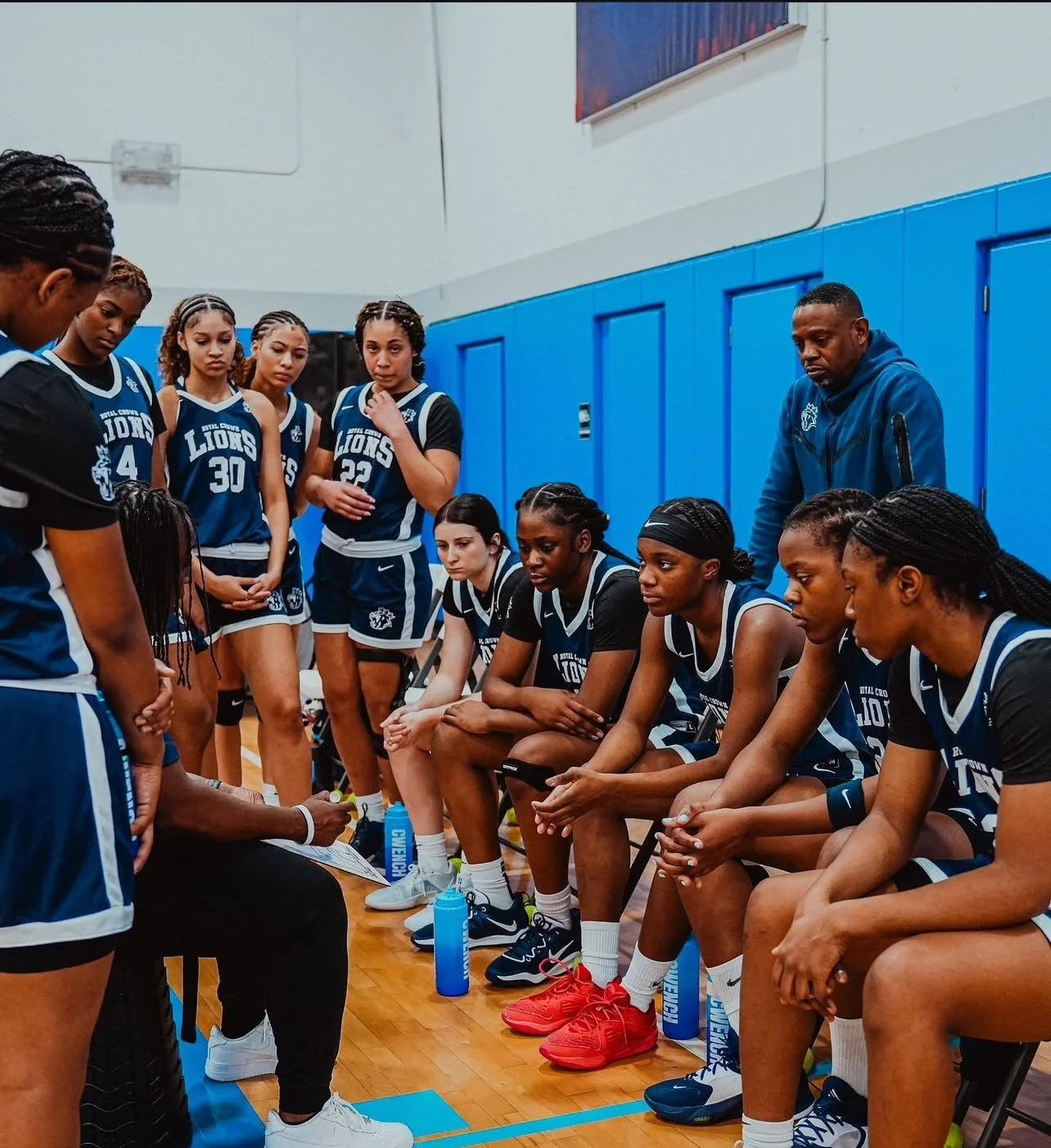
There may not be one objectively best basketball private school for every student. Families should consider academic fit, athletic fit, personal fit and future fit.
Questions families should ask
Is there an appropriate entry level for the athlete today?
Is there enough room to progress?
Will the student be supported academically and personally?
Can the school help the student move toward the next realistic stage?
Individual Fit
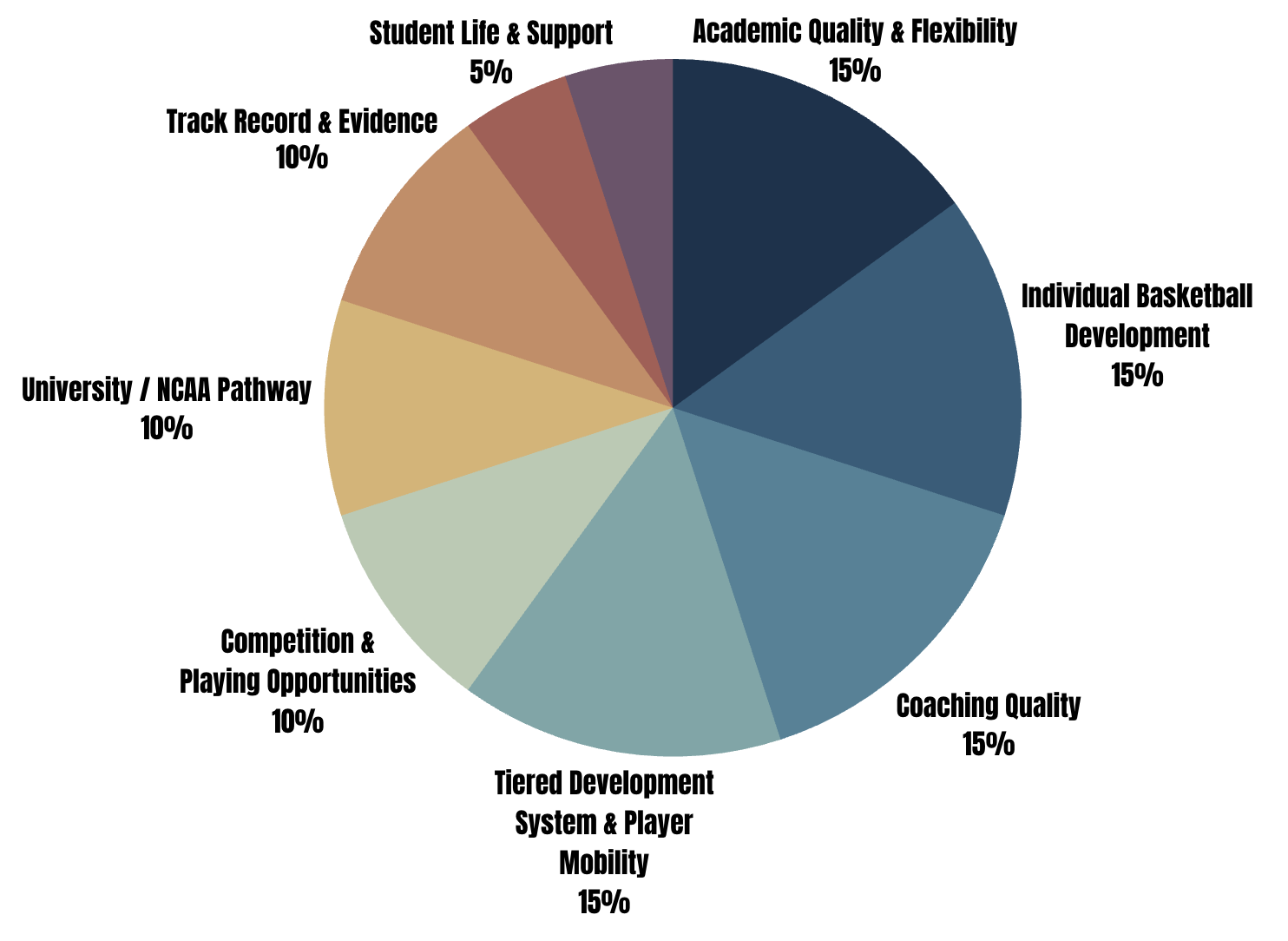
Basketball Private School Comparison Scorecard
Families can score each school from 1 to 5 in every category. The more important follow-up is: What evidence supports this score?
1. Visit the School
See a normal academic and training day - not just a recruitment presentation. If possible, observe different basketball teams. A tiered system should look connected even when players are at different stages.
2. Talk to the People Who Will Develop the Student
Meet coaches, teachers, academic advisors and, where relevant, boarding staff. Ask: "Where would my child enter your development system today - and what would he or she need to demonstrate to progress?"
3. Ask for Evidence
Look at real student journeys, player development, university destinations and academic outcomes. The best basketball private school should not simply tell families how good the program is. It should be able to show how its system helps student-athletes grow.
Before Choosing a Private School
Find the Right Development Level for Your Student-Athlete
Every player's journey is different. Rather than beginning with 'Which team can I join?', RCS encourages families to begin with: Where is the athlete today, and what environment will help them develop next?
Families interested in the RCS Student-Athlete Program can request an initial basketball and academic assessment to explore the student's current level, development priorities, and potential pathway.